
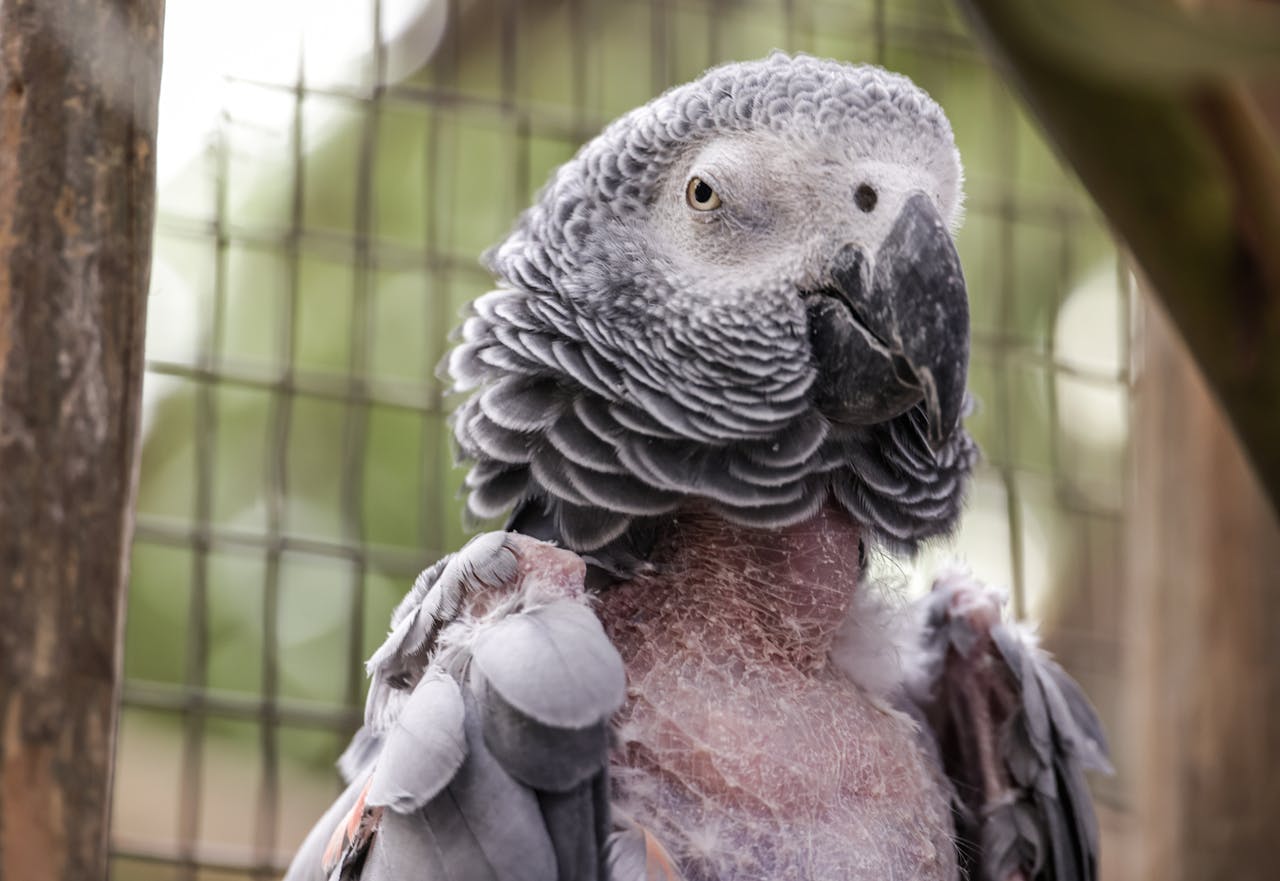
Many owners of African Grey Parrots eventually notice a worrying behavior: their bird begins pulling out its own feathers.
This behavior is known as feather plucking.
It often signals that the parrot may be experiencing stress, boredom, or an underlying health issue.
Key Takeaways
- Feather plucking is relatively common in African Grey parrots
- Boredom and lack of stimulation are frequent causes
- Poor or unbalanced diets may affect feather health
- Environmental changes can increase stress
- Persistent feather plucking should be evaluated by an avian veterinarian
Quick Facts
| Item | Information |
|---|---|
| Behavior | Feather Plucking |
| Common Species | African Grey Parrot |
| Typical Causes | Stress, boredom, health issues |
| Common Signs | Bald patches, missing feathers |
| Possible Solutions | Improve environment, diet, and interaction |
What Is Feather Plucking in African Grey Parrots?
Parrots normally preen their feathers every day, which is a natural grooming behavior.
However, it may become feather plucking if you notice:
- Noticeable feather loss
- Bald patches on the body
- Frequent biting or pulling at feathers
In severe cases, the bird may even damage its skin.
Cause 1: Lack of Environmental Stimulation
African Grey parrots are highly intelligent birds.
If their environment is too boring or repetitive, they may develop stress and start plucking feathers as a coping behavior.
Common situations include:
- Too few toys
- Limited daily interaction
- Spending long periods confined in a cage
Providing a variety of toys and enrichment activities can significantly reduce this behavior.
Cause 2: Loneliness and Lack of Social Interaction
African Grey parrots are extremely social animals.
Without enough companionship, they may become anxious or bored.
Examples include:
- Owners being away for long hours
- Very little daily interaction
- Limited social stimulation
Spending daily time talking, training, or playing with your parrot can greatly improve their mental well-being.
Cause 3: Poor or Unbalanced Diet
Feather health is closely related to nutrition.
A diet lacking essential nutrients may lead to poor feather quality, including deficiencies in:
- Vitamin A
- Calcium
- Protein
Offering a balanced and varied diet can help support healthy feather growth.
Cause 4: Environmental Stress
African Grey parrots are very sensitive to changes in their environment.
Certain changes may trigger stress, such as:
- Moving to a new home
- Introducing new pets
- Increased noise levels
- Relocating the cage
A stable and predictable environment helps parrots feel secure.
Cause 5: Health Problems
Some medical conditions may also cause feather plucking.
Possible health-related causes include:
- Skin infections
- Parasites
- Allergic reactions
- Hormonal imbalances
If feather plucking continues, it is best to consult an avian veterinarian for a proper examination.
Tips to Help Reduce Feather Plucking
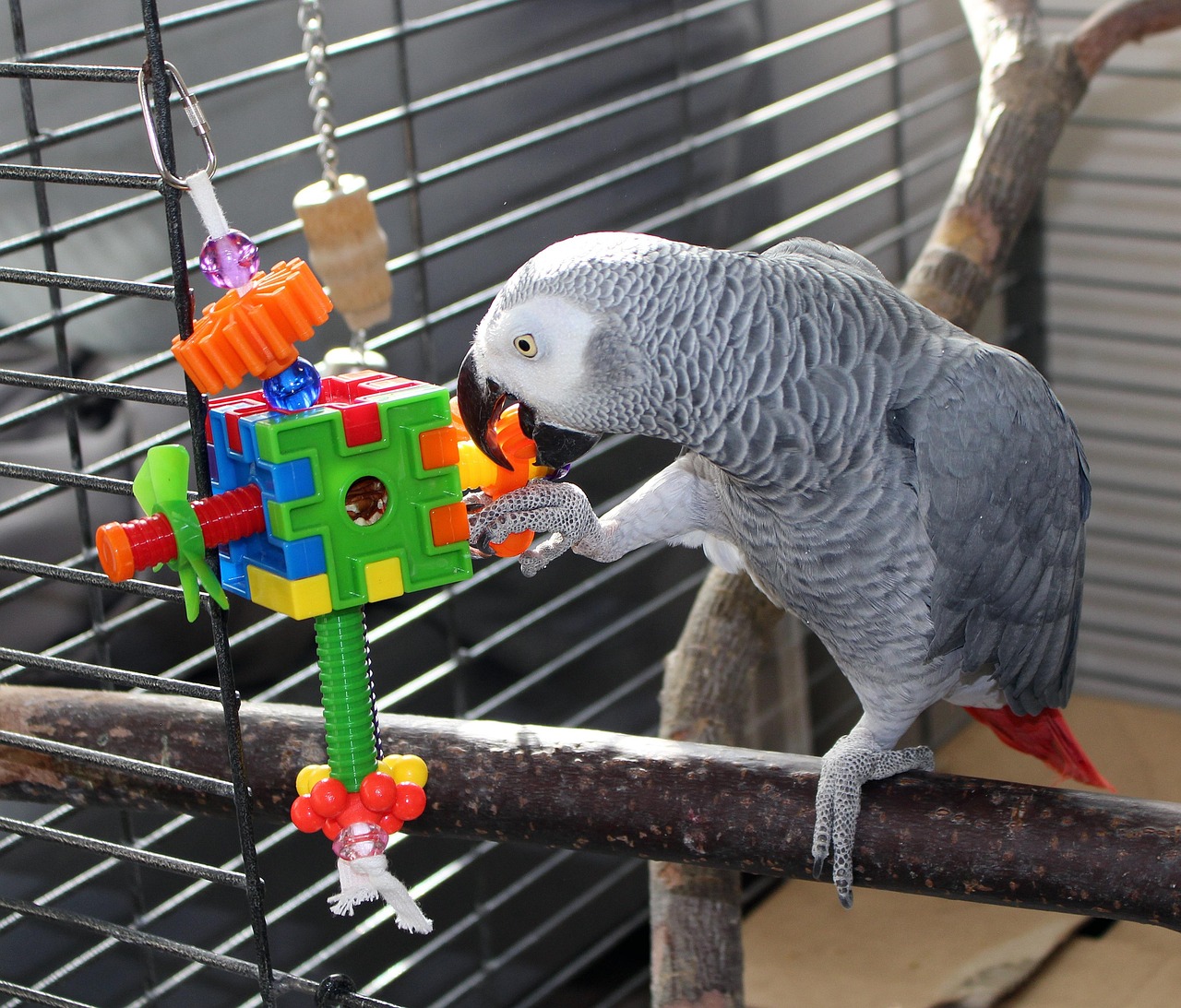
A few simple changes can help reduce this behavior:
- Provide a variety of toys
- Rotate toys regularly
- Spend time interacting or training every day
- Offer a balanced diet
- Maintain a stable living environment
FAQ
Will an African Grey stop feather plucking on its own?
If the behavior is caused by stress or environmental factors, improving the bird’s living conditions may help reduce or stop the behavior over time.
Will the feathers grow back?
In most cases, feathers will grow back after molting.
However, severe feather damage may require veterinary treatment.
When should I see a veterinarian?
If feather plucking lasts for several weeks, spreads to larger areas, or causes skin injuries, it is recommended to consult an avian veterinarian as soon as possible.