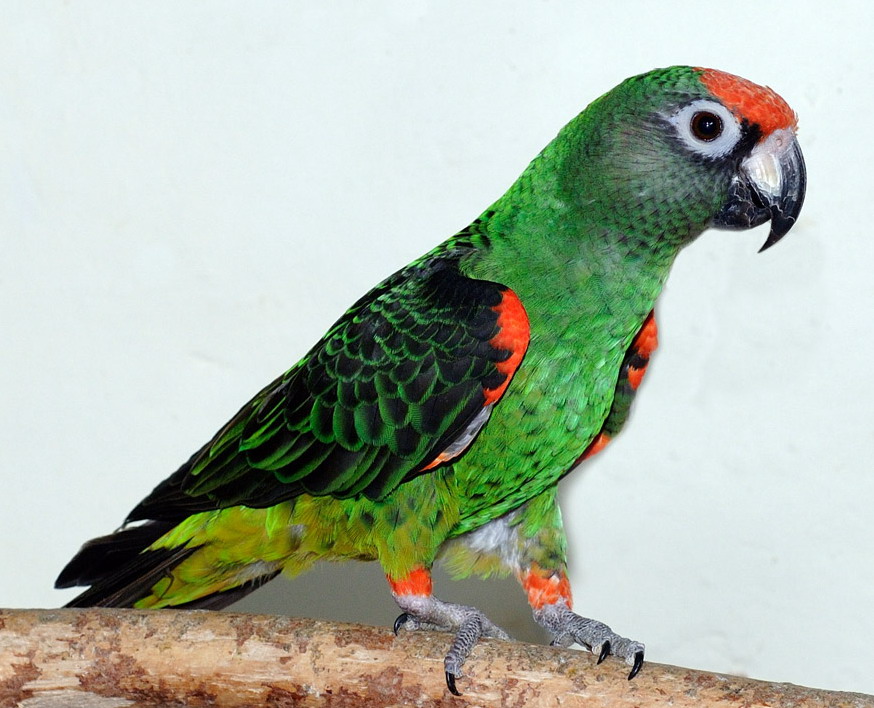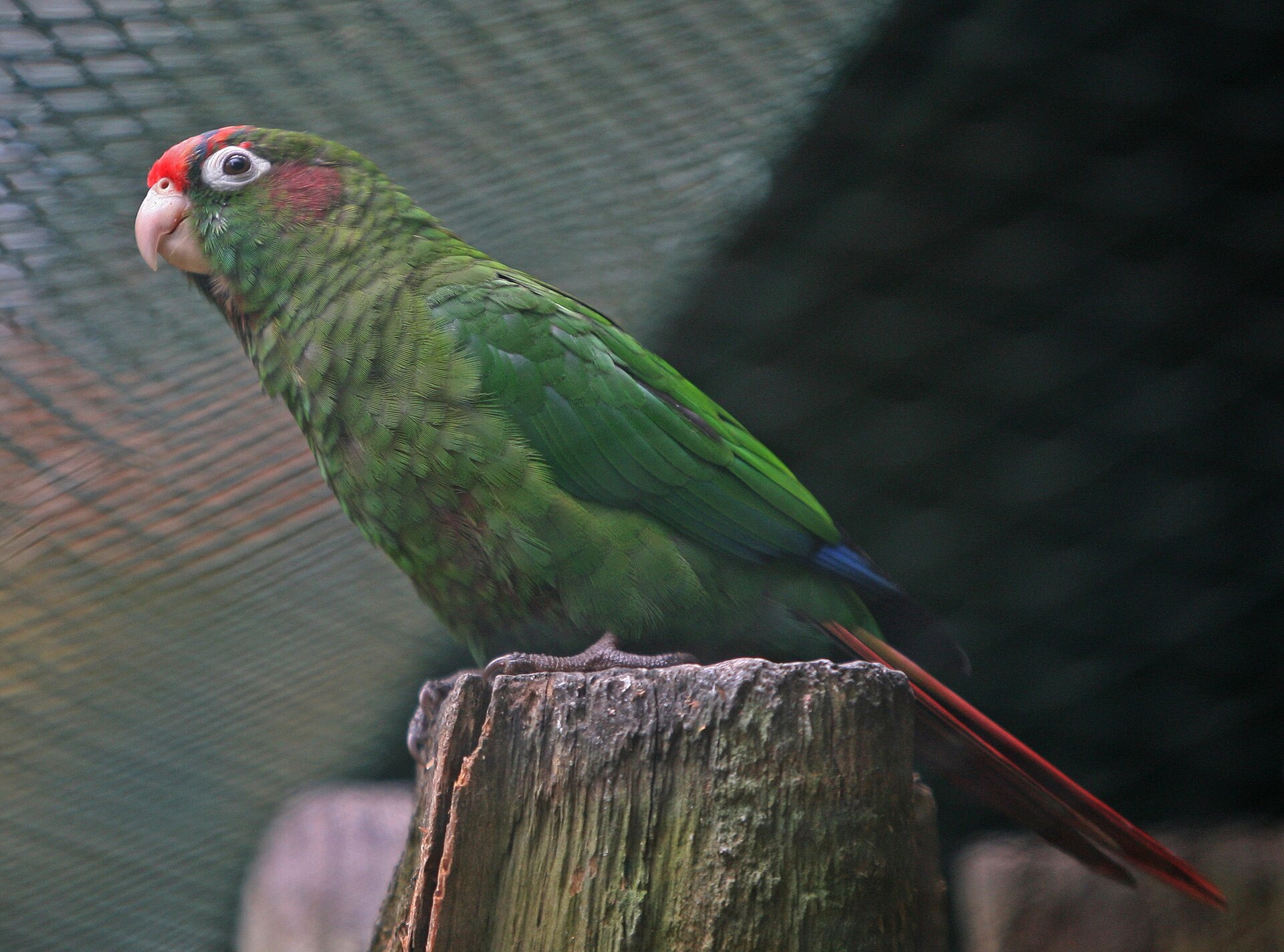
The Crimson-bellied Conure (Pyrrhura perlata) is a visually striking member of the conure family, easily recognized by its deep red belly feathers. Among Pyrrhura conures, it is considered one of the most colorful and distinctive species.
Native to the eastern Amazon Basin of Brazil, this species inhabits tropical lowland rainforests and forest edges. In the wild, Crimson-bellied Conures are typically seen in pairs or small flocks. Due to their limited natural range and lower captive breeding numbers, they are relatively uncommon in the pet trade and best suited for experienced parrot owners.
Intelligence
Ability to learn, solve problems, and adapt.
Vocalness
How expressive this pet is through sound.
Sociability
Comfort level with social interaction.
Affection Level
Tendency to show affection toward humans.
Playfulness
Willingness to play and engage in games.
Activity Level
Overall daily activity and movement needs.
Independence
Tendency to act independently rather than seek attention.
Ease of Care
Overall simplicity of daily care.
- Length: 23–25 cm
- Weight: 65–80 g
- Head: Dark-toned with subtle facial scaling
- Belly: Bright crimson red, the species’ defining feature
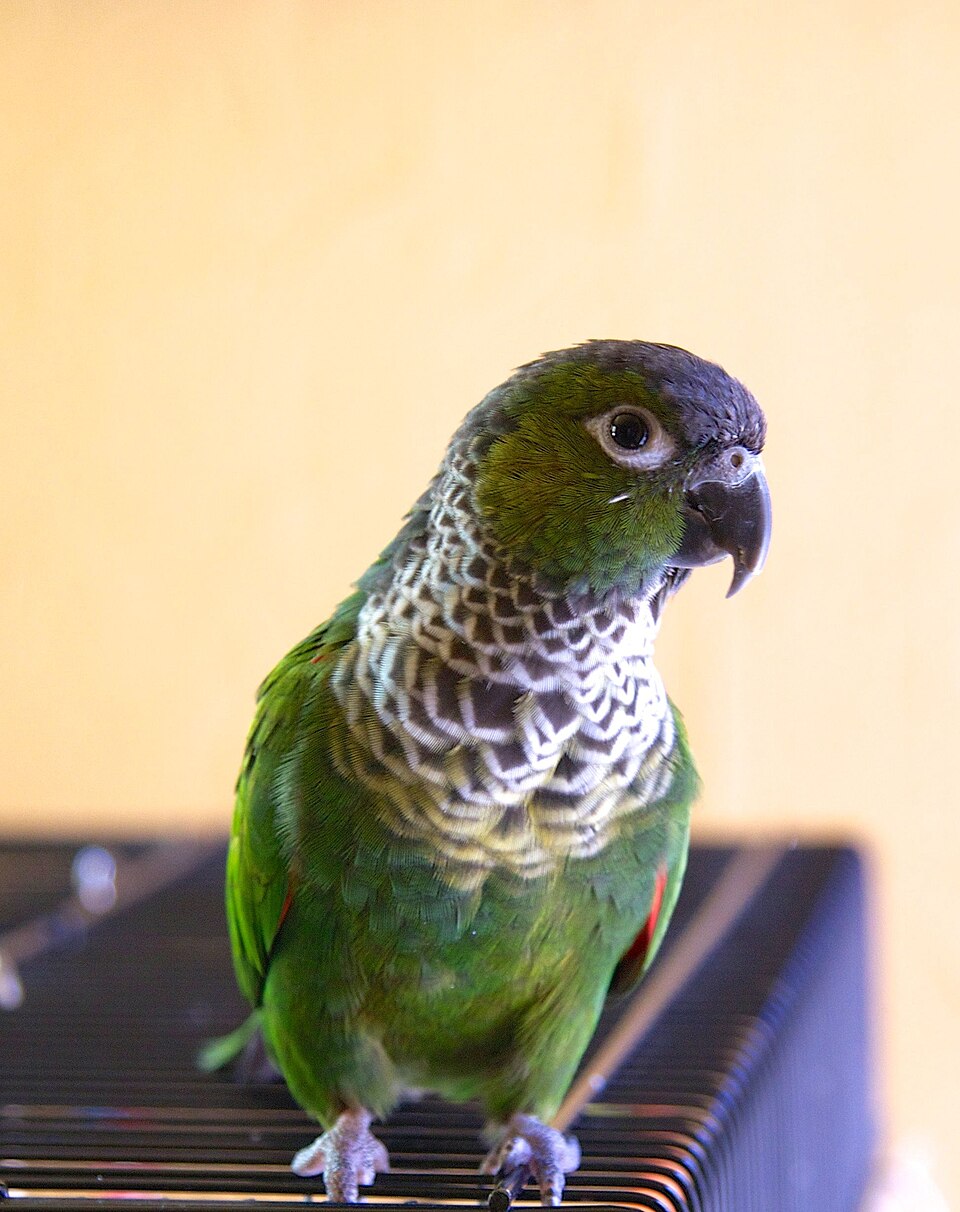
- Body: Predominantly green with scalloped chest feathers
- Wings: Blue-tinged flight feathers
- Tail: Maroon to dark red
- Eye ring: Prominent white bare eye ring
Crimson-bellied Conures are known for their:
- Affectionate and social temperament
- High energy and curiosity
- Strong intelligence and trainability
- Moderate vocalization, louder when excited
They thrive on interaction and may develop behavioral issues if neglected.
A balanced diet includes:
- High-quality pellet food
- Fresh fruits and vegetables
- Occasional nuts and legumes
Daily out-of-cage time and enrichment are essential for mental and physical health.
Common concerns include feather plucking, nutritional imbalance, and stress-related illness.