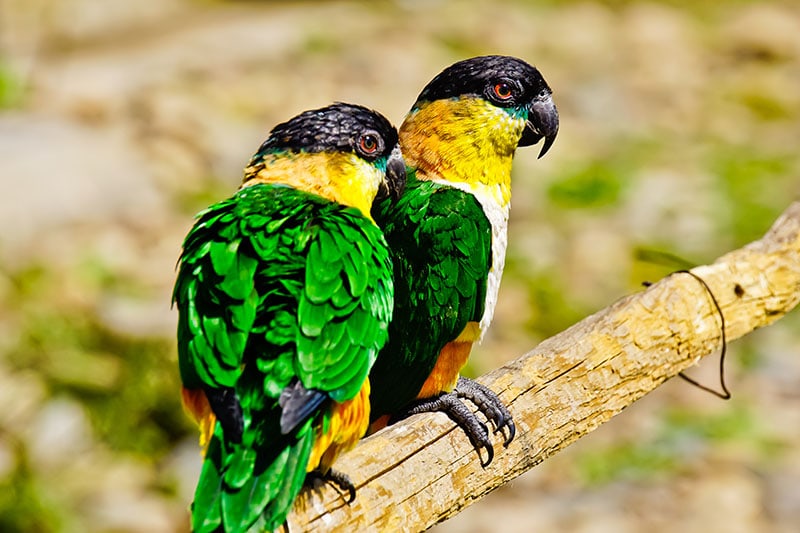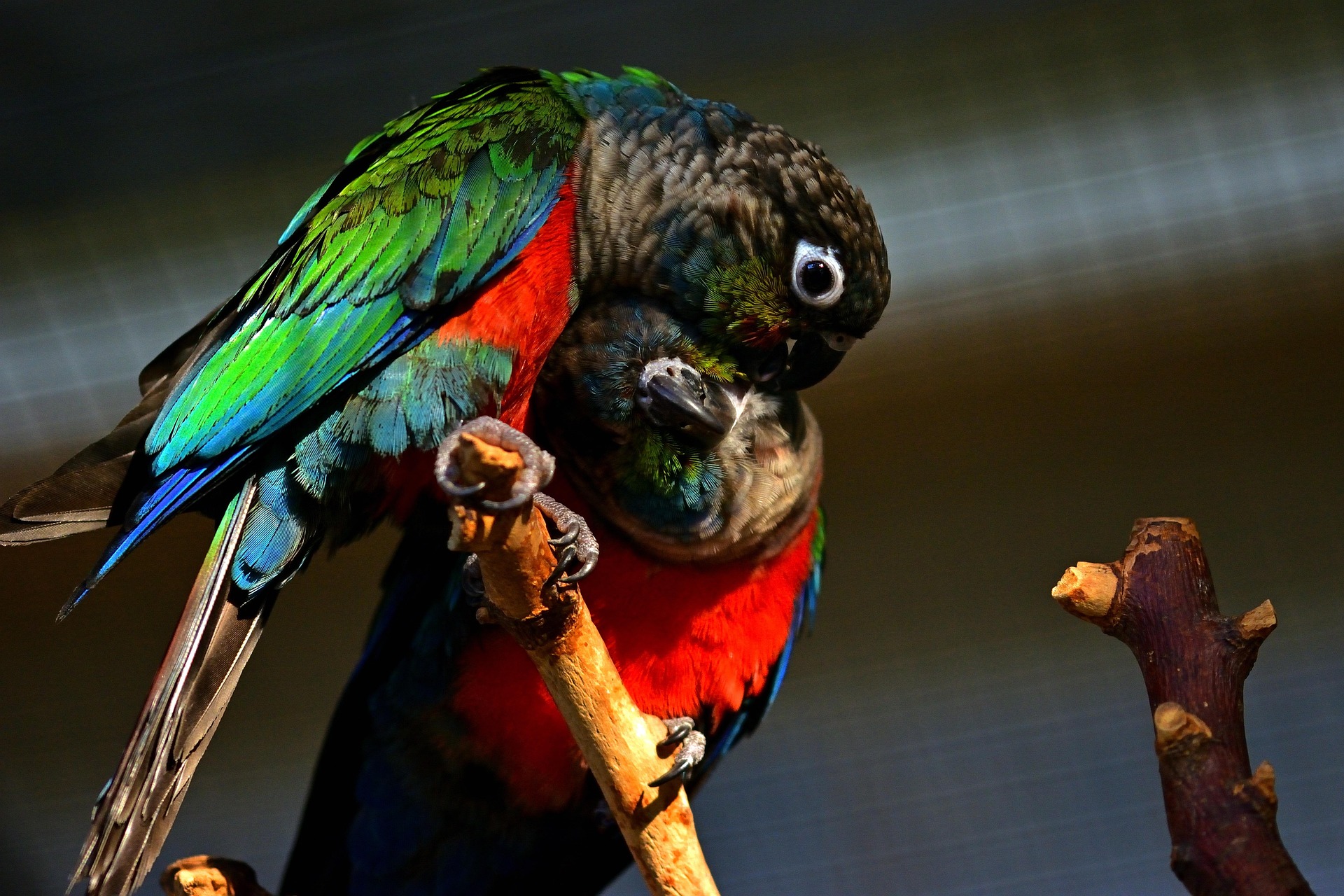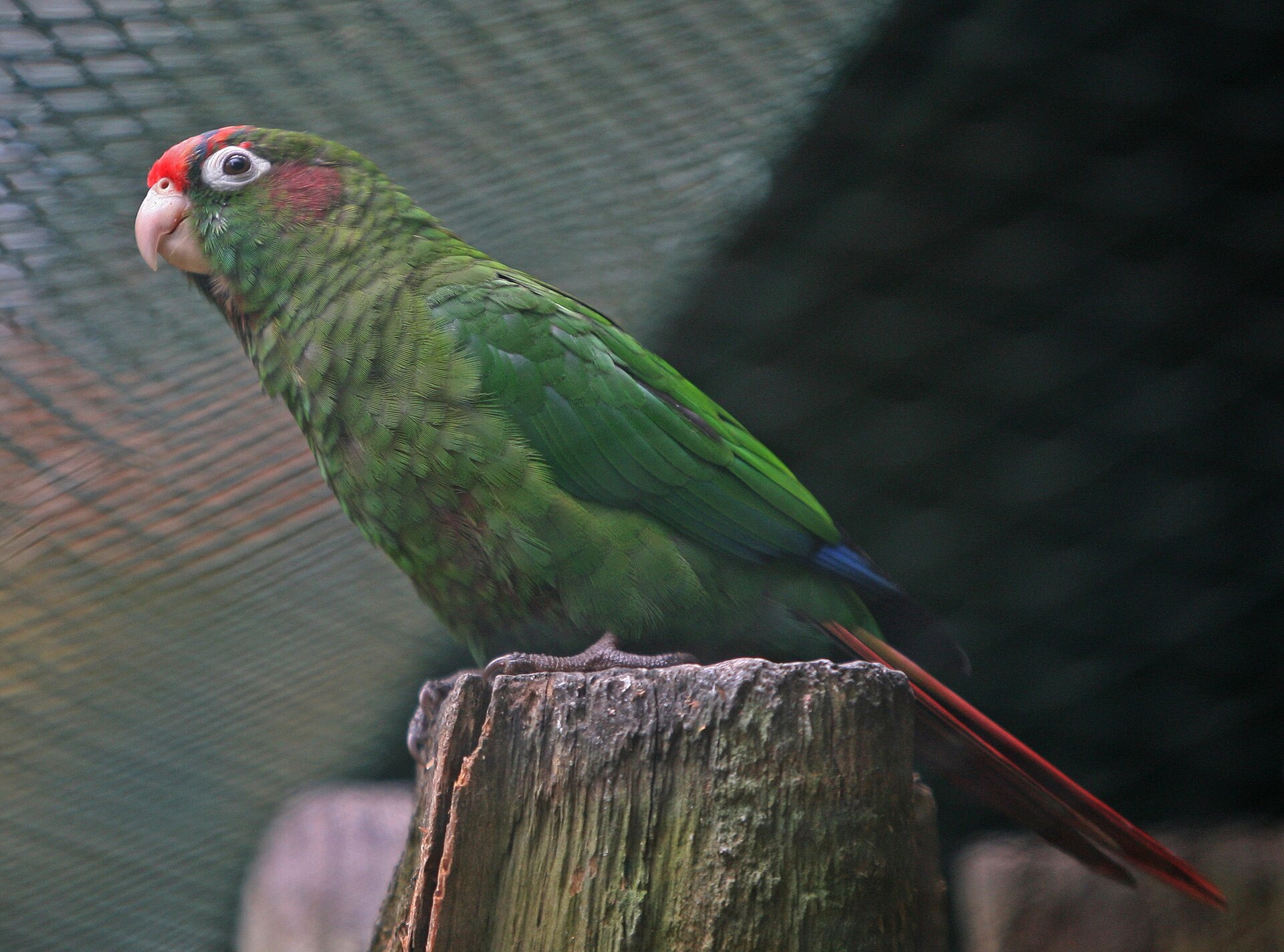
The Black-capped Conure (Pyrrhura rupicola) is a small parrot native to the western Amazon Basin of South America. It is easily recognized by its dark brown to black crown and pearl-like scalloped feathers on the chest, which give the bird its popular nickname among aviculture enthusiasts.
Belonging to the Pyrrhura conures, this species is well known for its lively personality, strong bonding behavior, and suitability as a companion parrot.
Intelligence
Ability to learn, solve problems, and adapt.
Vocalness
How expressive this pet is through sound.
Sociability
Comfort level with social interaction.
Affection Level
Tendency to show affection toward humans.
Playfulness
Willingness to play and engage in games.
Activity Level
Overall daily activity and movement needs.
Independence
Tendency to act independently rather than seek attention.
Ease of Care
Overall simplicity of daily care.
- Length: Approximately 9–10 inches (23–25 cm)
- Weight: Around 2.3–3 oz (65–85 g)
- Crown: Dark brown to black
- Body: Predominantly green
- Chest & Belly: Distinctive scalloped, pearl-like pattern
- Wings: Blue-green flight feathers
- Tail: Deep red to maroon
- Eye Ring: White bare skin around the eyes
Black-capped Conures are known for their:
- Affectionate and social nature
- High energy levels and curiosity
- Strong desire for interaction
- Moderate vocalization, typical of small conures
Without sufficient enrichment and daily interaction, they may develop stress-related behaviors.
- Diet: High-quality pellets supplemented with fresh vegetables, fruits, and occasional nuts
- Exercise: Daily out-of-cage time is essential
- Enrichment: Toys, perches, and chewable items are highly recommended
They are suitable for dedicated beginners or intermediate bird owners.
With proper care, Black-capped Conures typically live 15–25 years in captivity.
Common health concerns include obesity, nutritional deficiencies, and behavioral stress if understimulated.