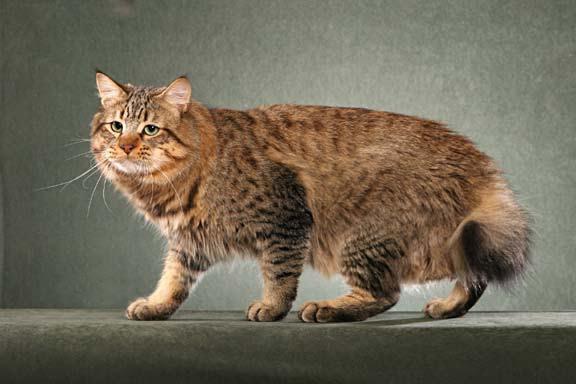
The Pixie-bob is a breed of domestic cat that was selected and bred to resemble the North American bobcat. Originating in the United States, the breed was developed by Carol Ann Brewer in the mid-1980s. Despite the bobcat-like appearance, DNA testing has confirmed that Pixie-bobs are wholly domestic.
Activity Level
Overall daily activity and movement needs.
Good with Children
Compatibility and patience around children.
Good with Other Pets
Ability to live peacefully with other pets.
Vocal Level
How frequently this pet makes vocal sounds.
Grooming Needs
Amount of grooming required to maintain coat and health.
Shedding Level
Amount of hair shedding throughout the year.
Pixie-bobs are known for their bobcat-like fur pattern, often with reddish tones mixed in. They have a large muzzle with round whisker pads and a red nose leather. Their eyes are blue when kittens, then change to green or gold when several months old. Tail size can range from 2 inches to hock length when the leg is extended. The head is pear-shaped, which is considered to be the most important characteristic of the breed.
Pixie-bobs are active and enjoy playing with other animals. They are also known for their unique vocalizations, including “chirps”, chatters, and growls. Despite their active nature, they are highly sociable around both their owners and strangers.
Pixie-bobs are known for their bold and sociable nature. They are intelligent and capable of understanding some words. They enjoy being in the same room as their owners, often following them around the house. Some of their unique behaviors include head butting, ball fetching, and leash walking.
Pixie-bobs require regular grooming due to their bobcat-like fur. They are generally healthy cats, but regular vet check-ups are essential to ensure their well-being. They also require a balanced diet and plenty of playtime to keep them physically and mentally stimulated.
Major concerns: None
Minor concerns: Cryptorchidism, Dystocia and cystic endometrial hyperplasia
Occasionally seen: Hypertrophic cardiomyopathy (HCM), Blocked tear ducts
Suggested tests: Regular vet check-ups
Life span: Not specified
The Pixie-bob’s development as a breed has led to its recognition by The International Cat Association (TICA) and the American Cat Fancier’s Association (ACFA). Despite the initial belief that they were bobcat hybrids, DNA testing has confirmed that they are wholly domestic. Their unique appearance and sociable nature continue to endear them to cat lovers worldwide.