
Table of Contents
- What Your Pregnant Dog Can and Cannot Do
- Preparing Before Whelping
- Stages of Whelping
- Postpartum Care
Finding out that your dog is expecting puppies is an exciting experience. Since a dog’s pregnancy lasts only about two months, you can look forward to the sound of newborn puppies filling your home before long.
Many owners naturally wonder how dogs give birth and how to recognize when labor begins. There is usually no need to panic—whelping is typically much simpler for dogs than childbirth is for humans. In most cases, the mother can deliver her puppies without any special assistance. However, it is still important for the owner to stay nearby in case complications arise and help is needed.
If you have any concerns about your dog’s pregnancy or the birthing process, contact your veterinarian promptly. Professional advice can help ease your worries. Below are practical tips from our care team to help you prepare for whelping.
What Your Pregnant Dog Can and Cannot Do
Can a pregnant dog be bathed?
Pregnant dogs can be bathed if necessary, but extra care is required. Bathing is best done during the first half of pregnancy, using warm water and mild, dog-specific shampoo.
Before giving birth, additional grooming is usually unnecessary. Bathing is allowed, but should be done cautiously in late pregnancy. For long-haired dogs, trimming the hair around the vulva and teats is recommended.
Can a pregnant dog be vaccinated?
Vaccination during pregnancy is generally not recommended, although exceptions may exist for medical reasons. This depends on the type of vaccine and the stage of pregnancy and should always be decided by a veterinarian.
Feeding a pregnant dog
During the first half of pregnancy, dietary changes are usually not needed.
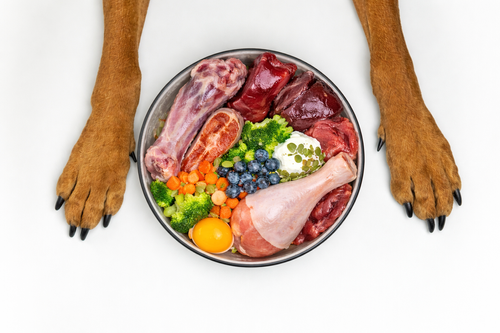
After day 35 of pregnancy, dogs fed commercial food should gradually transition to a formula designed for pregnant and nursing dogs or to puppy food. Dogs on a natural diet should have their food intake increased by about 50% and receive supplements suitable for pregnant and nursing dogs.
The number of daily meals depends on the type of diet and the individual dog. Consult your veterinarian for tailored advice.
What to avoid during pregnancy
Pregnant dogs should not be taken to places where many animals gather, and contact with other dogs should be limited. Such environments increase the risk of infection, and excessive activity or aggression may lead to injury.
Preparing Before Whelping
The expectant mother needs a quiet, private place at home to give birth. It is best to prepare a “whelping area” during the last two weeks of pregnancy.
A large cardboard box lined with puppy pads (to absorb accidents) and clean blankets, sheets, or towels works well. Make sure the box is large enough for the mother and puppies, with sides high enough to prevent puppies from crawling out.
Place the box in a quiet area at a comfortable room temperature. Familiar bedding or toys can help the mother feel secure before labor begins.
Preparing Assistance in Advance
Although most dogs deliver without problems, preparation is essential in case complications occur.
Make sure you have your veterinarian’s emergency contact number, as labor often begins at night. Inform your vet of the expected due date. If problems arise, you may need to transport the dog to a clinic, so ensure transportation is available.
Have basic supplies ready, including clean nail scissors and several clean, dry towels. If a large litter is expected, an extra basket may be useful for temporarily holding puppies.
If puppies must be separated briefly, they must be kept warm. Use microwaveable heat packs rather than hot water bottles, which can be punctured by sharp claws or teeth.
Signs That Labor Is Beginning
A key sign of impending labor is a drop in body temperature from around 38.5°C (101.3°F) to about 37°C (98.6°F). Labor usually starts within 12–24 hours after this drop.
During the final week of pregnancy, take your dog’s rectal temperature twice daily. If you are unsure how to do this, ask your veterinarian for guidance. If temperature checks cause stress, stop—keeping the dog calm is more important.
In the last week, the mother may become restless and seek isolation. Appetite loss and nesting behavior are common within 12–24 hours before labor.
Rarely, a dog may move the prepared whelping area to another location. If this happens, avoid forcing her to move back.
“Hope for a smooth delivery—but preparation is always wise.”
Stages of Whelping
Whelping usually proceeds smoothly, and complications are uncommon. While intervention should be minimal, close observation is important so help can be provided if needed.
The entire process typically lasts 3–12 hours, though it may take longer for some dogs. Whelping generally occurs in three stages.
Stage One: Uterine Contractions and Cervical Dilation (6–36 hours)
At this stage, uterine contractions begin and the cervix dilates, though signs may be subtle.
Common signs include:
Swelling of the vulva
Restlessness and frequent position changes
Rapid breathing or mild trembling
Vomiting or loss of bladder/bowel control
A drop in body temperature before returning to normal (38–38.5°C)
These signs are usually normal.
Contact your vet if:
Strong contractions last more than 36 hours
Bloody or purulent discharge is observed
Stage Two: Delivery of Puppies (3–12 hours)
This is the active labor phase, with strong abdominal contractions.
Normally you may observe:
Strong, regular straining
Rupture of the water sac with clear fluid
First puppy born within 20–30 minutes of strong contractions
Puppies born every 15–60 minutes
Rest periods between puppies, not exceeding 2 hours
Tail-first (breech) delivery is normal in dogs.
Seek veterinary help immediately if:
Straining lasts over 30 minutes with no puppy
No puppy is born within 4 hours of water breaking
More than 2 hours pass between puppies
Green or dark discharge appears without delivery within 2–4 hours
Stage Three: Expulsion of the Placenta
Each puppy is followed by a placenta. Stages two and three often alternate.
The mother will usually break the sac, sever the cord, lick the puppy, and eat the placenta.
After delivery:
The number of placentas should match the number of puppies
Monitor closely for 4–6 hours if placental retention is suspected
Warning signs include:
Fever above 39.5°C
Foul-smelling discharge or heavy bleeding
Aggression or indifference toward puppies
Assisting During Whelping
Intervention is rarely needed, but assistance may be required.
If a puppy is born while the mother is delivering another, remove the membrane and rub the puppy vigorously with a clean cloth to stimulate breathing.
If the mother does not lick the puppy, gently clear fluid from the mouth and nose and rub with a towel.
If the umbilical cord is not severed, tie it about 2.5 cm from the abdomen and cut between the knots with clean scissors.
Postpartum Care
Once delivery is complete and both mother and puppies are stable, offer food and water and continue her regular pregnancy diet.
Encourage the mother to go outside briefly if possible. Replace soiled bedding and allow the new family to rest quietly together.