Breed Introduction
In the lively world of pets, ferrets (Mustela putorius furo) are known for their playful and curious nature. The name “ferret” comes from the Latin word “frittus,” meaning “little thief,” and they certainly live up to it! Ferrets love to stash away small items, and their mask-like facial markings make them look like little bandits.
Ferrets are unique pets. Unlike dogs or cats, there is only one domesticated breed of ferret: Mustela putorius furo. However, not all ferrets look the same—they come in various colors and patterns.
The American Ferret Association recognizes eight standard ferret colors. To describe your ferret’s coat, follow this three-step process:
- Identify the standard color.
- Identify the fur pattern.
- Identify any white markings.
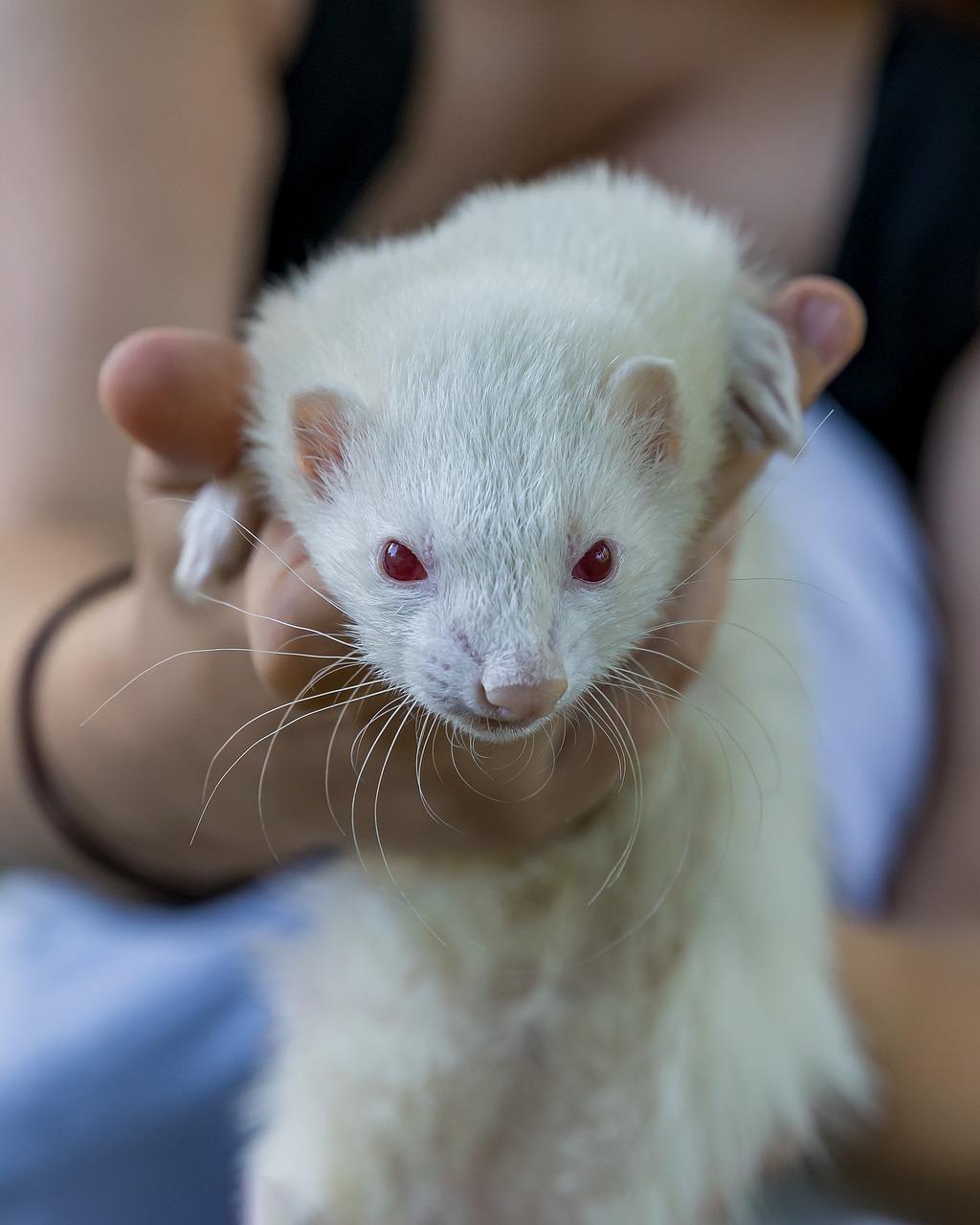
Albino Ferrets
- Features: White to cream fur, bright ruby red eyes, and a pink nose.
- Image:
Black Ferrets
- Features: Black guard hairs, white undercoat, black or nearly black eyes and nose. Sometimes, the nose may have black speckles.
- Image:

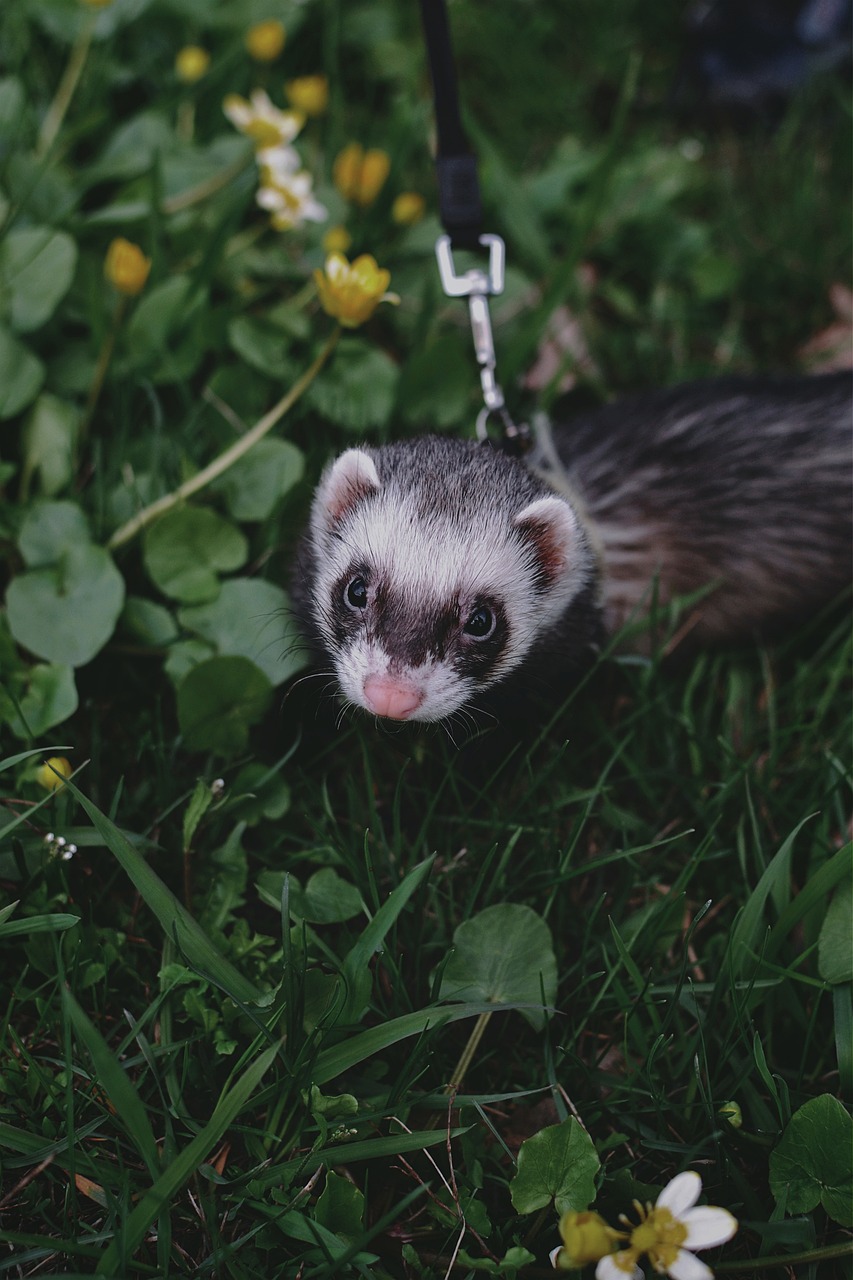
Black Sable Ferrets
- Features: White undercoat, dark ash guard hairs with a black glossy shine, black or brown nose with possible speckles.
- Image:
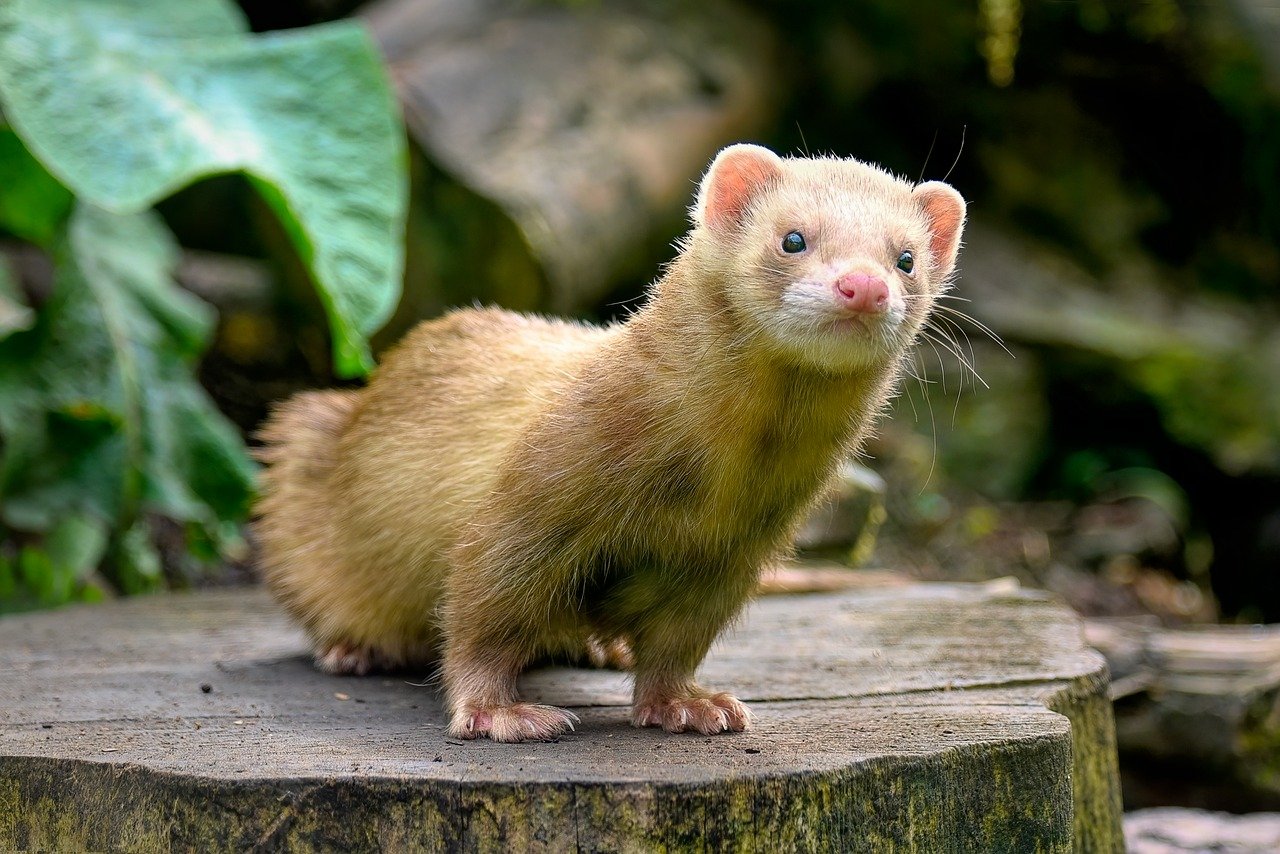
Champagne Ferrets
- Features: Tan or diluted chocolate brown guard hairs, white to cream undercoat, dark brown or burgundy eyes, nose can be beige to pink.
- Image:
Chocolate Ferrets
- Features: Milk chocolate guard hairs, white undercoat, brown or burgundy eyes, nose can be pink, beige, or a mix of both.
- Image:
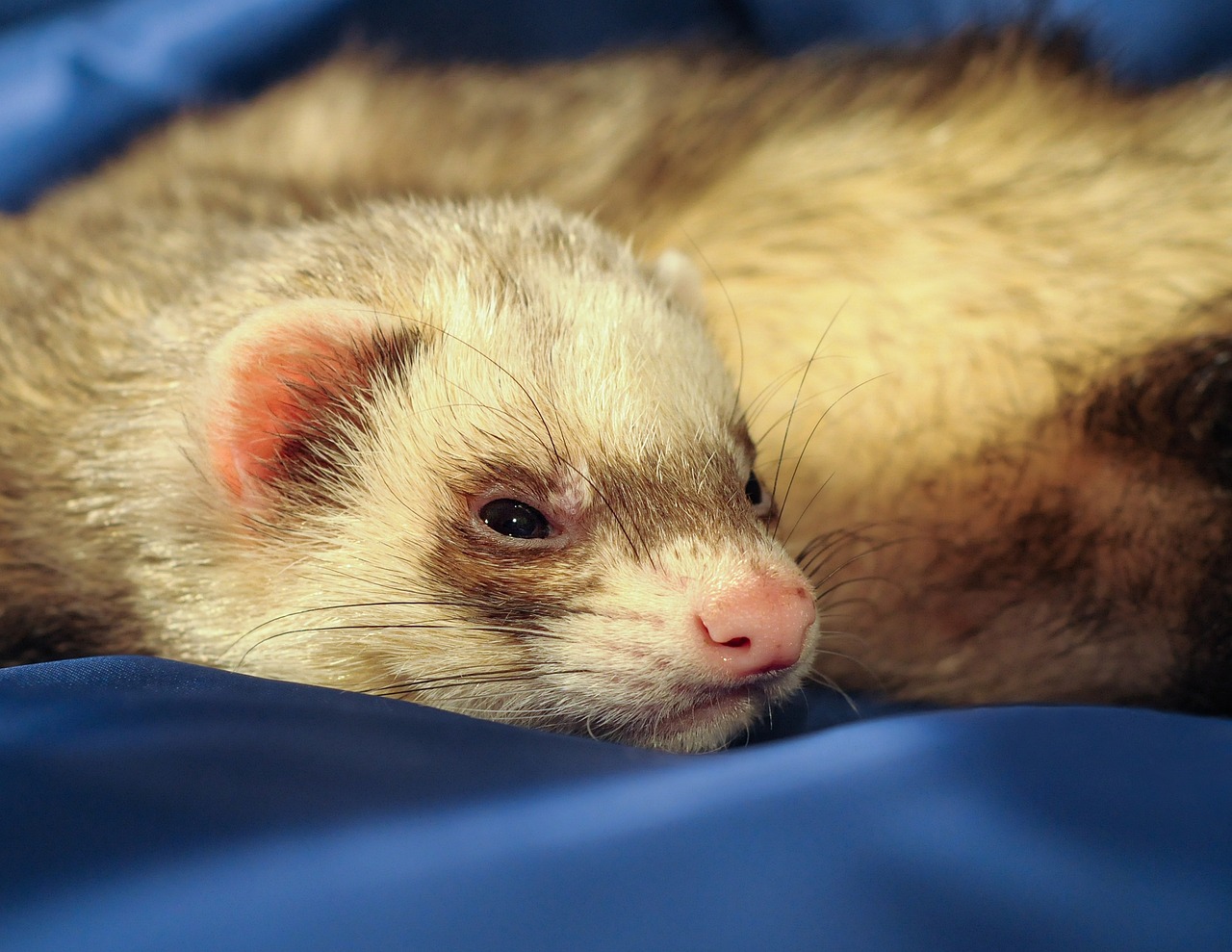
Dark-Eyed White (DEW) Ferrets
- Features: White or cream fur, black eyes.
- Image:
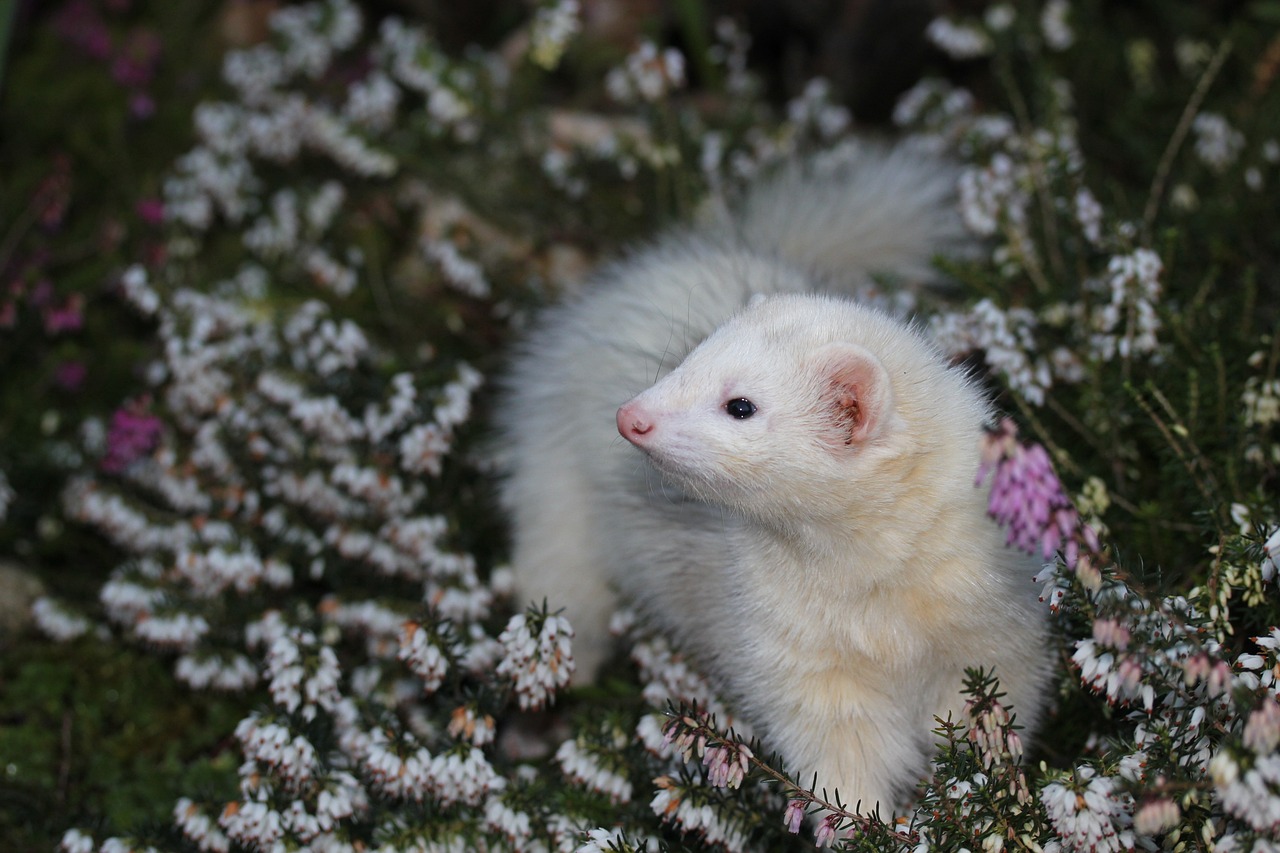
Sable Ferrets
- Features: Warm brown guard hairs, white to light golden undercoat, brown or nearly black eyes, light brown nose.
- Image:
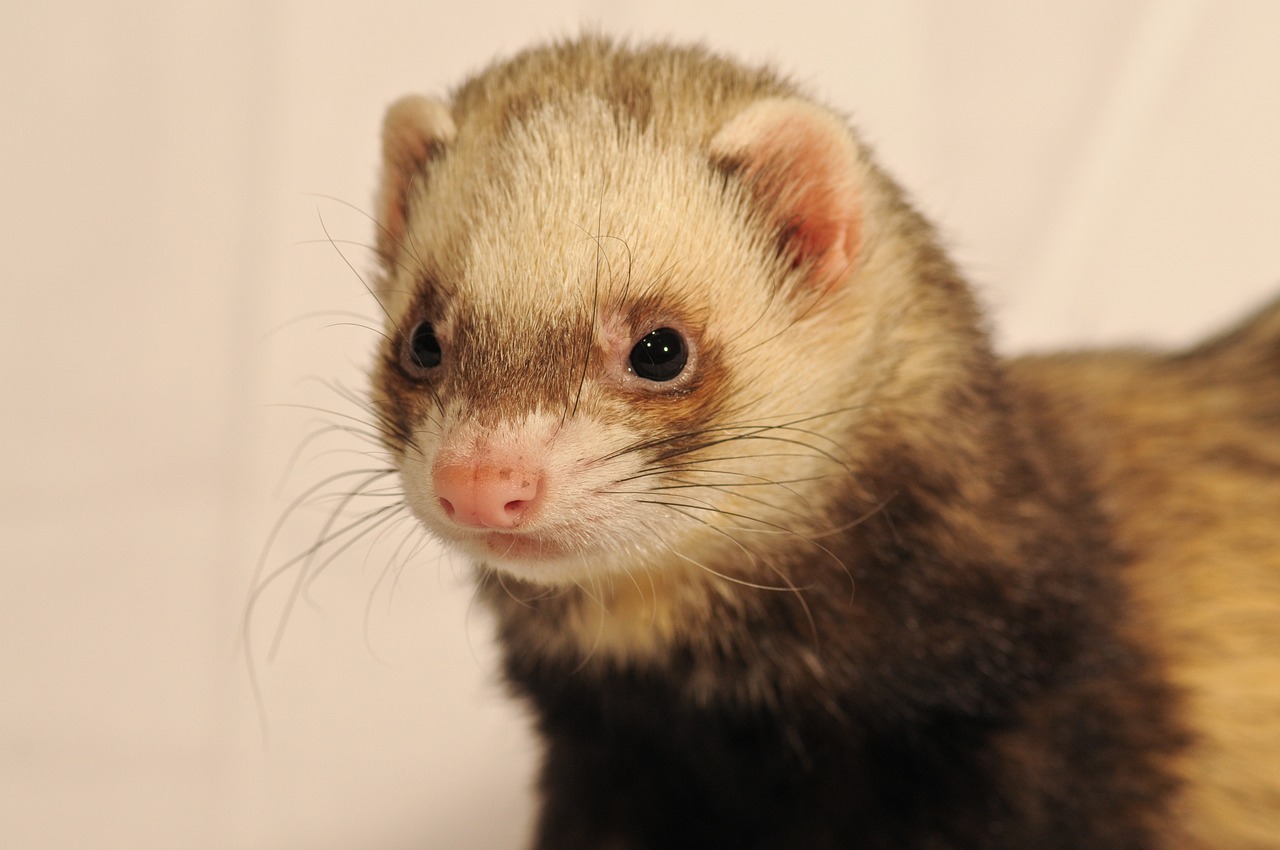
In addition to their primary color, ferrets can have white markings. Currently, ferrets can have five types of markings:
- Bib: A white patch under the neck.
- Mitt: White markings on the feet, extending to the ankle. Often comes with a bib marking.
- Points: White markings on the shoulders, legs, tail, and face.
- Roaning: White guard hairs mixed throughout the coat, giving a “salt and pepper” appearance.
- Stocking: White markings extending halfway up the leg.
Ferrets can also have mask-like markings on their faces. The American Ferret Association recognizes three mask patterns:
- Standard or Full: A solid color band around and between each eye.
- T-Bar: A solid color band around and between each eye, extending up to the top of the head, resembling an upside-down “T.”
- V: A thin band of color around each eye and down to the nose, resembling a “V.”
Ferret Patterns
Now that you can recognize the colors and markings seen in ferrets, it’ll be easier to determine what pattern your ferret has. There are nine recognized basic ferret patterns, three of which are also categorized as markings (mitt, point, and roaning).
- Blaze Ferrets: Any ferret color can have a blaze pattern, except for white ferrets. This pattern is a long stripe on the top of a ferret’s head that runs down the back of the neck.
- Mutt Ferrets: A mutt pattern can contain spots, roaning, and other patterns. Typically, mutts will have multiple colors without a distinct color pattern.
- Panda Ferrets: A panda pattern can be seen in any coat color (except in white ferrets). Panda ferrets have an almost entirely white head with darker fur around the shoulders and hips.
- Solid Ferrets: This pattern may be seen in any coat color besides white. The guard hairs should be 100% the same color, with no white hairs present.
- Standard Ferrets: Standard patterns are the most common pattern in ferrets. Any coat color—excluding white—can have a standard pattern.
- Striped/Patterned Ferrets: A stripe or patterned coat can be any color except all white. Most guard hairs should be white, with some colored hairs throughout the coat.
- Mitt Ferrets: Mitt ferrets can be any standard color except all white. As their name suggests, they will have white mitt markings on their feet.
- Point Ferrets: Point patterns can be seen in any standard color besides white, with noticeable differences between the coat color and points.
- Roaning Ferrets: Roaning patterns can be seen in any colored ferret, except for all white ferrets. 40–60% of the guard hairs should be white, giving a “salt and pepper” effect.
Ferrets require a spacious cage with appropriate bedding, such as fleece or paper-based materials. Their diet should consist mainly of high-protein, high-fat foods, such as ferret-specific food, chicken, turkey, and other meats. Due to their lack of fur, they need regular skin care, including moisturizing to prevent dryness and frequent checks for any skin issues.
Feeding Guidelines:
- High-Protein Food: Ferrets need high-protein foods like chicken, turkey, and ferret-specific food.
- Limited Vegetables: Provide a small amount of vegetables as supplements, like bell peppers and carrots.
- Clean Water: Ensure a constant supply of fresh, clean water, preferably from a water bottle to avoid contamination.
Ferrets are prone to several health issues:
- Skin Problems: Their hairless skin requires special care to prevent dryness and irritation. Regular moisturizing and gentle cleaning are essential.
- Temperature Sensitivity: Without fur, they are more susceptible to temperature changes and should be kept in a stable, warm environment.
- Insulinoma: Symptoms include lethargy, drooling, and seizures.
- Respiratory Infections: Can occur if kept in unsanitary or drafty conditions. Good cage hygiene is crucial.
Regular veterinary check-ups and proper care can help mitigate these health risks.
Are ferrets good pets? Yes, they are excellent pets due to their gentle and friendly nature.
Is caring for a ferret difficult? They require more specialized care than furred animals, particularly in terms of skin care and temperature control, but they are otherwise relatively easy to care for.
Do ferrets like to be held? Once they are comfortable with their environment, they can be very affectionate and enjoy being held and petted.
Are ferrets easy to train? Yes, they can be trained to perform basic behaviors and tricks.